Ad images are not just product images with louder colors.
They are a narrower business job. The question is not simply which image model is strongest. It is what the ad needs to do on the page, in the feed, or inside the campaign system.
Ads Are About Performance Constraints, Not Just Style
Most ad-image requests inside Rivya are really trying to solve one of these jobs:
stop the scroll quickly
keep the product and brand legible
hold a repeated campaign system together
carry text, offer structure, or promo layout
establish a stronger campaign mood
Those jobs sit near ecommerce and landing-page work, but they are not the same decision.
When The Ad Still Has To Read Like A Product Asset
Flux 2 Pro is still the strongest first answer when the ad has to preserve product accuracy, readable details, and commercial clarity.
That is the better place to start for:
product-led paid-social ads
launch offers with visible packaging or logos
commercial creatives where readability matters more than mood
ads that are still close to a real shippable product asset
This is the path for ads that still need to behave like product communication before they behave like campaign art.
When The Hard Part Is Campaign-System Control
GPT Image 1.5 becomes more useful when the problem is not one ad image, but a repeatable campaign system.
That usually means:
larger reference sets
repeated ad variants
stable layout logic across a campaign family
tighter obedience around structure and composition
Once the real question becomes "how do we keep this campaign coherent?" system control matters more than single-image punch.
When The Ad Is Really About Offer Text And Layout
Ideogram V3 becomes the better fit once the ad is partly a typography and layout job, not just a visual one.
That is the stronger path for:
headline-driven creatives
offer-led promo graphics
poster-like social ad layouts
ads where text readability matters as much as the image itself
At that point, the problem is no longer only image generation. It is design-sensitive communication.
When The Ad Is Really Carrying Campaign Mood
Grok Imagine becomes more compelling when the ad concept is really trying to establish taste, tone, or campaign atmosphere.
That is where it earns a serious test:
mood-led ad concepts
editorial campaign visuals
ads where brand taste matters more than tight structural obedience
Once the ad is mostly carrying direction and feeling, the mood-first path becomes stronger.
Midjourney remains documented for comparison, but it is currently paused on Rivya and cannot start a generation. Check its status page rather than treating it as a live ad-creative option.
When This Is Not Really An Ad Page
This page stops being the best answer when the real job is:
store-page throughput
landing-page hero design
broader product-first image routing
narrower product-photography art direction
At that point, the question is no longer ad-specific enough for this page to stay efficient.
Where To Go Next
If the real task is landing-page design, read AI Image Generator for Landing Pages.
If the real task is store delivery, read Best AI Image Generator for Ecommerce.
If the real task is broader product-first image choice, read Best AI Product Image Generator.
If the real task is narrower product-photography art direction, read AI Product Photography Generator.
If you need the related workflow guides, read Image Workflows in Rivya and References and Uploads in Rivya.
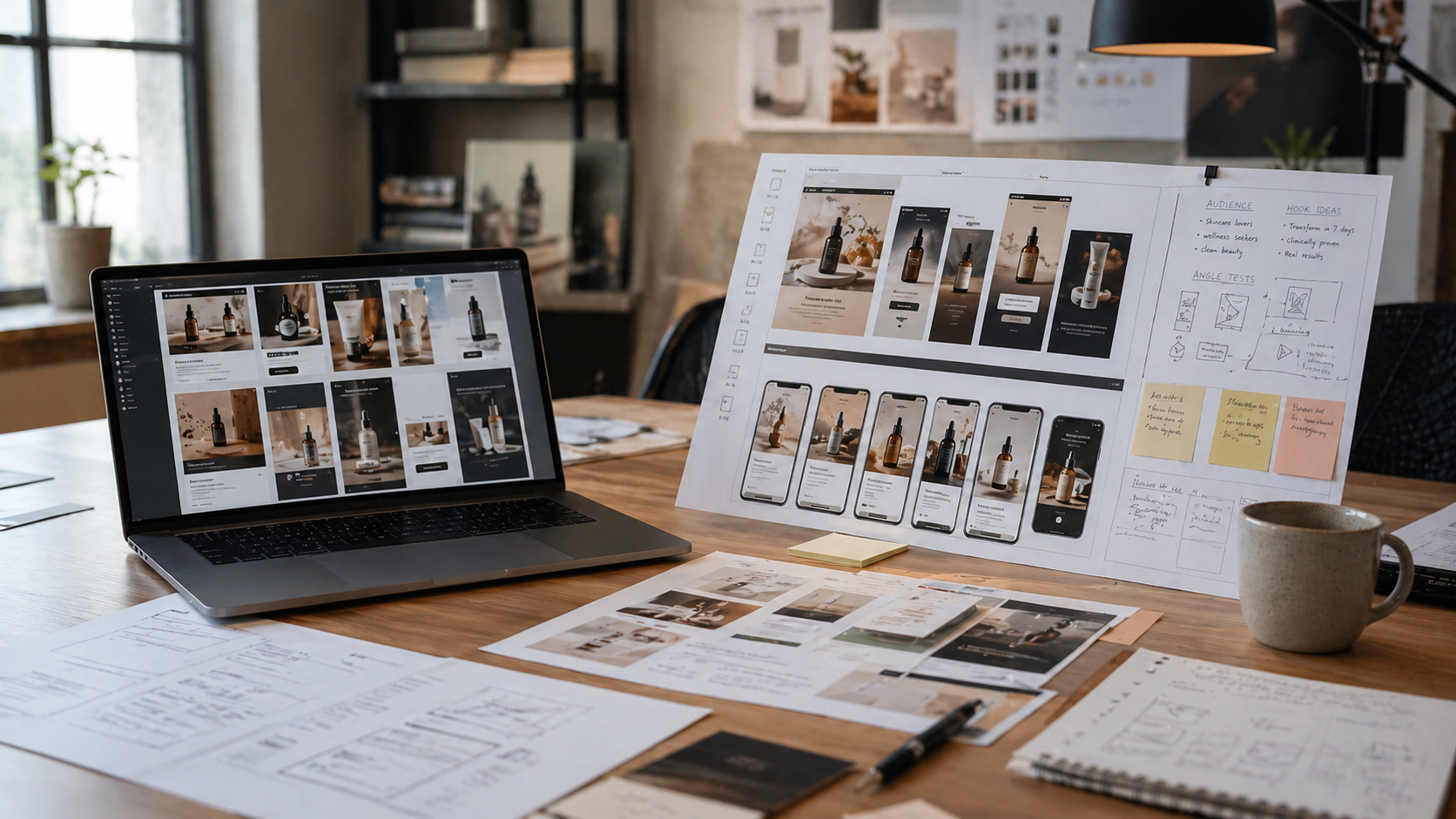
Build One Ad-Creative Brief
Before generating, write the ad as a business asset instead of a loose image idea.
Include:
offer and audience
product or service proof point
channel and crop, such as paid social, display, or launch creative
whether the asset needs readable copy or only visual direction
required reference role, if the product or brand system must stay stable
the claim or promise that must not be exaggerated
That brief gives the model something measurable to satisfy. It also makes it easier to decide whether the next run should change the image model, the copy structure, or the campaign angle.
Review The Ad Before Variants
Do not create a variant set until the first ad answers the core job.
Check:
product clarity
offer readability
claim safety
crop and platform fit
brand consistency across likely variants
whether the image still makes sense without the prompt beside it
If the concept works, save it before making variants. If it fails, fix the weakest constraint first instead of asking for more styles.