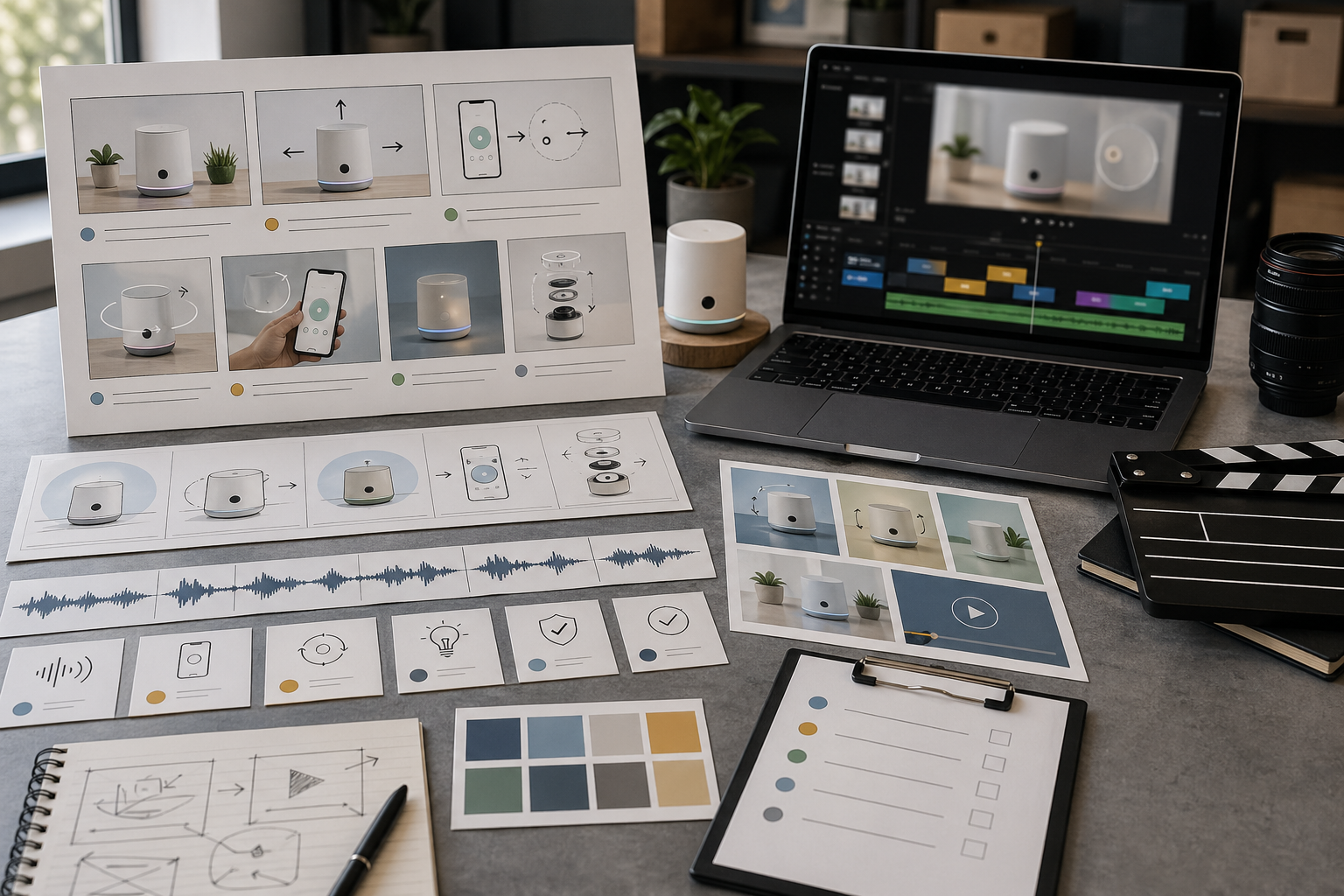

AI visual consistency is not the same thing as making every image identical.
For brand work, consistency means the viewer can recognize the same product, taste, and visual rules across multiple assets. Rivya can help, but only if the prompt, references, and review process separate brand rules from one-off scene ideas.
What Consistency Really Means For AI Visuals
A consistent AI visual system usually keeps several things stable:
product shape and material
color palette
lighting style
background logic
composition habits
level of polish
audience expectation
Not every image needs to match every rule. A product listing image and a launch hero can feel different while still belonging to the same brand.
The goal is controlled variety, not visual cloning.
Separate Brand Rules From Scene Ideas
A common mistake is mixing brand rules and scene ideas into one loose prompt.
Brand rules are durable:
warm neutral palette
soft studio shadows
product centered with generous negative space
clean premium surface
minimal props
Scene ideas are temporary:
on a bathroom shelf
next to a gym bag
on a founder's desk
beside a holiday gift box
Keep those separate. Reuse the brand rules across prompts, then swap the scene idea when you need a new asset.
Use a compact brand asset brief before you open Image or Image Studio:
Brand role: [premium skincare / playful snack / B2B SaaS]
Product constants: [shape, material, color, label details]
Visual constants: [palette, lighting, background, prop density]
Allowed variation: [scene, crop, seasonal detail]
Must avoid: [wrong material, unreadable label, busy background, off-brand audience]
Primary use: [product page / ad set / launch hero / social carousel]
This brief keeps the model from treating every new prompt as a totally new brand world.
Use References For Structure, Product, Or Style
References work better when each reference has a job.
Inside Rivya, a reference might help with:
product identity
composition structure
lighting direction
material feel
brand mood
campaign continuity
Do not upload references and hope the model guesses which part matters. Say whether the reference should guide the product, layout, lighting, or style.
In Rivya, a stronger reference-led prompt usually names the control job directly:
Use the uploaded product reference to preserve bottle shape, cap color, and label placement.
Use the scene description only for the background and props.
Keep the brand palette warm, minimal, and premium.
Do not invent new logos, extra text, or packaging details.
If you upload multiple references, assign each one a role. One reference can preserve product identity, another can guide lighting, and another can show the campaign crop. If those roles are not written down, the output may borrow the wrong thing.
For a deeper product-level guide, use Image References in Rivya.
Keep Reusable Style Notes Short
A reusable style note should be short enough that you can actually reuse it.
For example:
Clean premium product photography, soft studio light, warm neutral background, minimal props, realistic materials, calm composition, no busy patterns.
That is more useful than a long paragraph full of competing aesthetic words.
If the note becomes too long, split it into:
durable brand rules
product-specific details
scene-specific details
output restrictions
This keeps prompts editable instead of fragile.
Review Consistency Before Publishing
Review a set of AI visuals together, not only one by one.
Look for:
product shape drift
inconsistent color temperature
props that change the perceived audience
different polish levels across assets
backgrounds that feel like different brands
crops that do not work as a campaign set
Consistency problems are easier to see in a grid than in a single output.
For a campaign set, review the assets in the same order the audience will see them:
hero or first ad impression
product detail image
social crop
retargeting or comparison image
email or landing page support image
Ask whether the product still feels like the same brand after the crop changes. If the answer is no, return to the durable brand rules before generating more variants.
Where AI Consistency Still Breaks
AI is not a full brand system replacement.
It can still drift on:
exact logos and text
small packaging details
repeated character or hand details
very strict product geometry
complex multi-asset campaigns without references
When exact fidelity matters, use references, review carefully, and keep expectations realistic. The best workflow is usually to use AI for strong directions and controlled variants, then review before production use.
Do not treat an AI result as the final approved brand asset. Keep approved logos, product photography, type, claims, and compliance language in your normal brand system. Rivya can help generate campaign directions and usable variants, but final brand approval should still happen against the official assets.
Next Steps In Rivya
Start repeatable visual directions from Image, and use AI Models when reference support or mode choice is the blocker.
Use Image References in Rivya to understand reference-led control.
Use Image Studio in Rivya when building a repeatable image direction.
Read AI Image Generator With Reference Images for a broader reference workflow.
Read Ownership and Commercial Use in Rivya before publishing brand assets.