Rivya Journal
Keep exploring
Continue with related guides, product notes, and workflow breakdowns from the Rivya team.

Author
Rivya Editorial TeamCategories
Product demo video is not the same thing as broad marketing video.
The main job here is product clarity: can the viewer understand, see, or believe the product in motion? That is what makes this page different from the broader marketing-video guide.
Most product-demo requests inside Rivya are really trying to solve one of these jobs:
make the product understandable in motion
produce a more premium launch demo once the concept is already right
test whether a product-motion idea is worth further work
create a demo where audio or narration is part of the deliverable
Those jobs are adjacent, but they are not the same decision.
Seedance 1.5 Pro is still the strongest first answer when the product demo has to be understandable, practical to iterate, and good enough to judge seriously.
That is the better place to start for:
feature demos
product reveal clips
product loops for commerce or launch use
clips where the product itself still has to read clearly
This is the broad demo default in the current lineup.
Veo3.1 Quality becomes the stronger path once the question changes from "can this explain the product?" to "can this feel like a more final launch asset?"
That is where it earns a serious test:
premium launch demos
higher-end reveal clips
product motion where finish matters more than iteration comfort
This is the premium demo path, not the broad working default.
Seedance 2.0 Mini is the current lower-rate Seedance path when the real question is whether the motion concept works at all. It supports text-only, frame-guided, and multimodal reference starts; use only the input scene the page allows.
That is the better path for:
compact first-run product-motion checks
lower-rate demo direction tests
deciding whether a reveal idea deserves a stronger second pass
This is the "learn first" demo path.
Sora 2 is currently paused on Rivya. Its model page is a status reference, not a runnable product-demo option.
Some demo requests are not only about motion. They are also about:
narration
native audio
spoken explanation
an audiovisual result instead of a silent-first result
Once that becomes central, the demo page should hand off to the narrower audio-led page rather than pretending the product-demo question is still the only question.
This page stops being the best answer when the real task is:
broader campaign marketing work
a text-only start where text-to-video is the main issue
footage transformation from existing video
a clip where audio is the primary constraint rather than product clarity
At that point, the narrower non-demo pages are faster because the product-explainer frame is no longer the main problem.
If the real task is broader campaign work, read AI Video Generator for Marketing.
If the real task is audiovisual output where sound is central, read AI Video Generator With Audio.
If the real task is still broad video routing, read Best AI Video Generator in 2026.
If the real task is footage transformation, read Video Workflows in Rivya and the relevant model pages.
If you need the related workflow guides, read Video Workflows in Rivya and References and Uploads in Rivya.
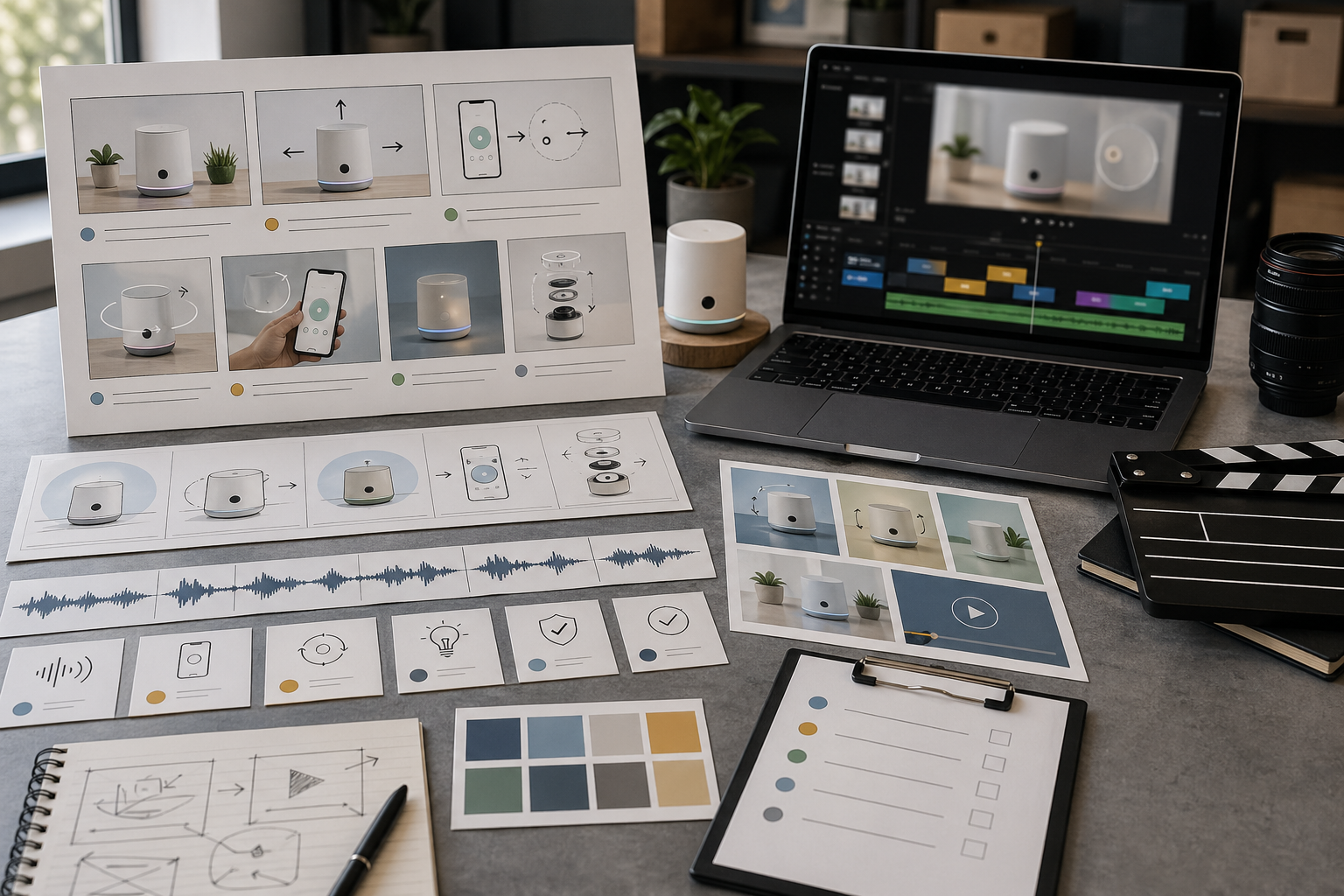
A product demo video should start from the product moment it has to explain.
Write down:
the feature, reveal, or use case the clip must make clear
the first three seconds and why someone would keep watching
the product angle, scale, and motion that must stay readable
duration, aspect ratio, and whether audio matters
whether this is for a launch page, product page, support asset, or paid creative
what would make the demo misleading or unsafe to publish
That keeps the model focused on explanation instead of producing generic motion around a product.
Do not create a full set of product clips until the first demo proves the main point.
Check:
whether the product remains clear throughout the motion
whether the feature or benefit is understandable without the prompt
whether the first seconds are strong enough
whether camera movement helps or hides the product
whether audio, if present, matches the job
whether any claim needs manual review before use
If the product moment works, save it in History before variants. If it fails, rewrite the demo brief around the feature rather than adding more cinematic style.