
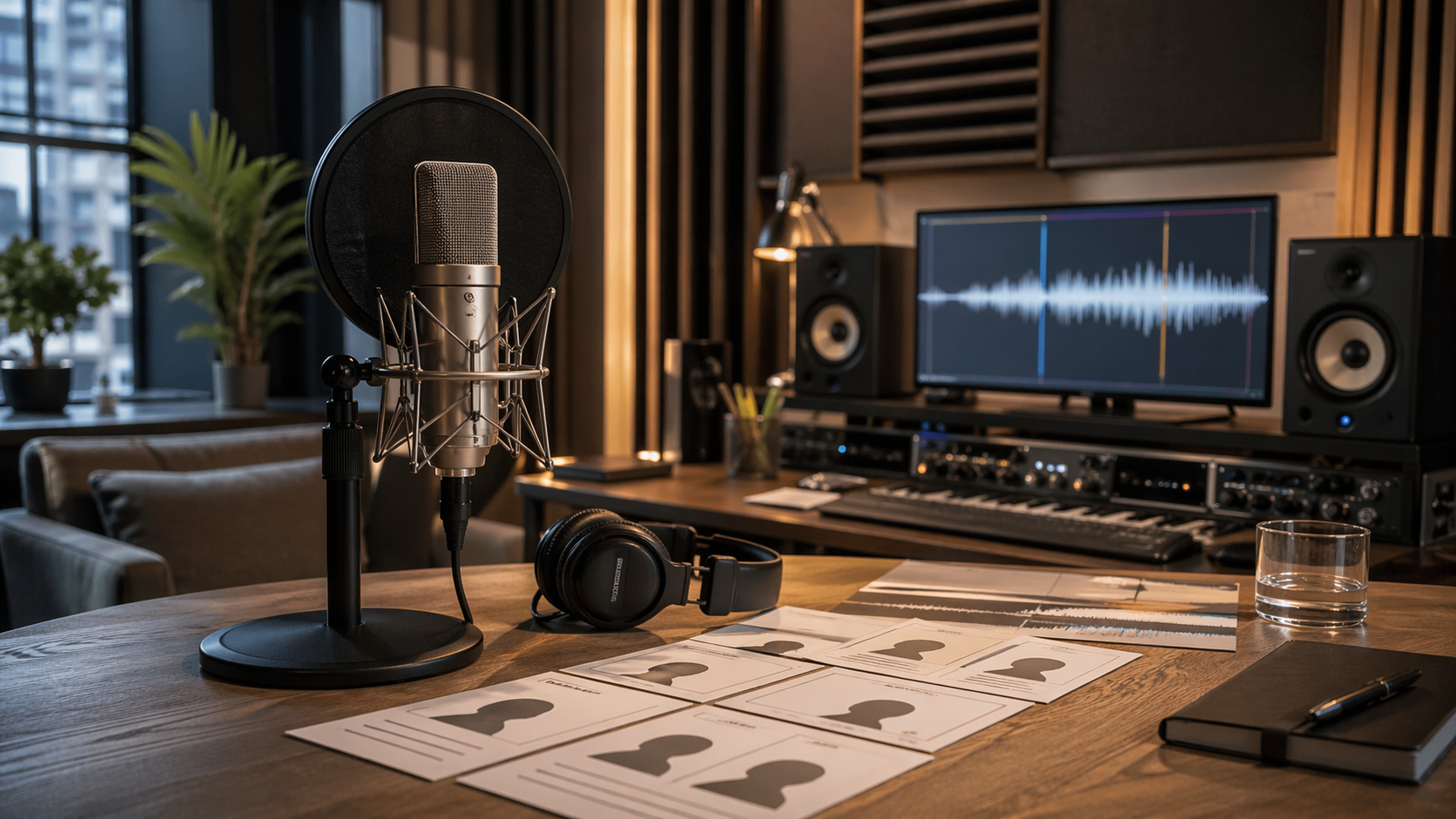
If the job is one clear speaking voice, start with ElevenLabs Turbo 2.5.
That answer changes once the real difficulty becomes cross-language delivery or a script with several speakers.
What We Evaluated
This guide was reviewed on April 28, 2026 against Rivya's live audio and voice paths. It focuses on voice generation, not every audio task Rivya supports.
We checked:
text-to-speech, multilingual speech, dialogue, cleanup, and sound-effect boundaries
when ElevenLabs voice models are a better first stop than general audio or music pages
how speaker count, language, script readiness, and commercial review change the choice
related docs: Audio Workflows, Audio Studio, and Commercial Review Checklist
This Page Is About Spoken Voice, Not All Audio
This guide follows Rivya's live spoken-audio catalog as it stood on April 21, 2026.
public paths cross-checked:
/audio,/ai-models, and current live voice-model pagesrelated product guides reviewed: Audio Workflows in Rivya, References and Uploads in Rivya, and Current Live Features in Rivya
this page is only about spoken-voice choice inside Rivya, not cleanup, sound effects, or music
The useful split is simpler than the title suggests.
Most voice requests collapse into three structures:
one speaker carrying the whole output
the same spoken asset across languages
several speakers whose turns matter
Once that structure is clear, the model choice usually becomes easy.
The Three Voice Paths That Matter
| Voice job | Best first path | Why it fits |
|---|---|---|
| one speaker, one script | ElevenLabs Turbo 2.5 | the broad default for plain voice generation, TTS, narration, and simple voice-over |
| one script across languages | ElevenLabs Multilingual V2 | the better path when the hard part is language transfer |
| several speakers in one scene | ElevenLabs Dialogue V3 | built for turn-taking, role separation, and scene structure |
These are not three brand preferences. They are three different spoken-audio jobs.
Start By Speaker Structure
Start with ElevenLabs Turbo 2.5 when the output only needs one stable, usable voice.
Move to ElevenLabs Multilingual V2 when the same delivery has to survive a language shift.
Use ElevenLabs Dialogue V3 when the script behaves like a scene instead of a single continuous read.
That is the cleanest mental model for the whole spoken-voice path.
Leave This Page Early When The Job Is Narrower
This page is a broad voice decision page. It is not always the best final page.
Leave early if the job is already clearly one of these:
plain text-to-speech
one-speaker narration or explainer voice
spoken replacement or dubbing
video-specific voice-over
Those tasks move faster on narrower pages once the speaker structure is already clear.
A Reliable Voice Decision Order
If you want the shortest reliable order, use this:
decide whether the output needs one speaker, one script across languages, or several speakers
choose the model that matches that structure
only then narrow into TTS, narration, dubbing, or video voice-over
That avoids the most common bad first run in voice work: solving the wrong structural problem first.
Where To Go Next
If the real task is plain text-to-speech, read Best Text to Speech Generator in 2026.
If the real task is one-speaker narration, read AI Narration Generator.
If the real task is spoken replacement or localization, read AI Dubbing Generator.
If the real task is video-specific voice-over, read AI Voiceover for Videos.
If the real task is broader than spoken voice, read Audio Workflows in Rivya or start at /audio.
Test Voice Models By Speaker Structure
Do not test one voice model with narration, another with multilingual copy, and a third with dialogue. That only proves the jobs were different.
For a useful comparison, keep the structure clear:
Use one short one-speaker script when testing broad voice output.
Use the same message across languages when localization is the real question.
Use a short turn-taking scene when dialogue structure is the hard part.
Keep pronunciation, pacing, and review criteria visible for every run.
This turns the comparison into structural fit, not brand preference.
Review The First Voice Result
Check whether the output matched the speaker structure first, then judge tone, pronunciation, pacing, language transfer, and role separation.
If the structure is wrong, switch paths before refining style. If the structure is right but the delivery is off, revise the brief and save the strongest result in History before making variants.