Create a 4-to-15-second MiniMax H3 video from text, one or two guide frames, or a verified multimodal bundle, with a dedicated 2K tier and explicit reference pricing.
The final cost is rounded up to whole credits.
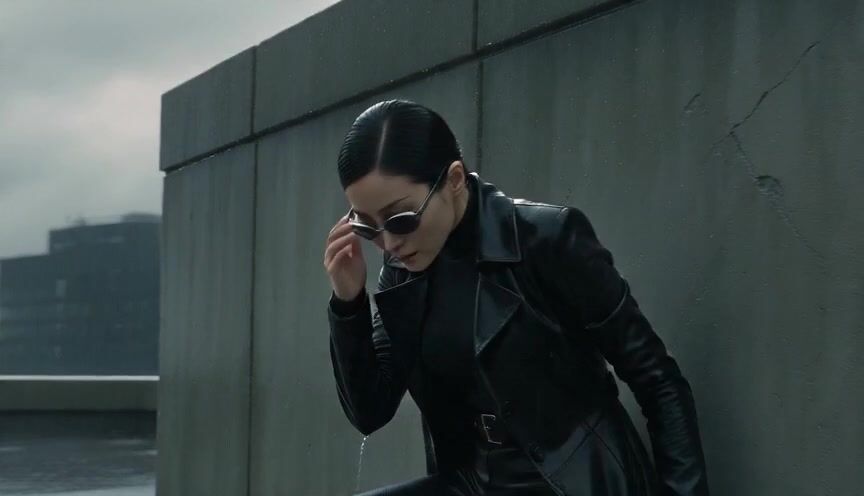
Example output
MiniMax H3
Text to Video · Image to Video
Example output
MiniMax H3
Best for
Supports
Try this model
No results to display yet.
Model examples
Review examples to help decide whether the model fits your task.
Model strengths
Model strengths
Suggested uses
Tasks to consider
Model details
Provider
MiniMax
Category
Video
Capabilities
Text to Video · Image to Video · Reference to Video
Credit charges
The credit cost depends on your inputs and settings. Check the estimate before you start.
Inputs
Up to 15 reference files
Prompt requirements
Up to 7,000 characters
Developer access
MiniMax H3 can be called through Public API v1. Modes that use reference media require uploads through the Files API. Check the model reference for supported inputs.
MiniMax H3 FAQ
Use MiniMax H3 for 4-to-15-second video work that needs either prompt-only framing, one or two guide frames, or a multimodal reference bundle. Its distinguishing controls are the 768P and 2K tiers plus explicit accounting for input-video duration and more than five images.
All three scenes use a non-empty prompt of up to 7,000 characters. Text accepts no uploads and requires a specific non-adaptive aspect ratio. Frames accepts exactly one image as either the starting or ending frame, or two ordered images as start and end, with no video or audio. Reference requires at least one upload; audio cannot be used by itself and must accompany an image or video.
Rivya accepts up to nine JPEG, PNG, or WebP images, three MP4 or MOV videos, and three MP3 or WAV audio files, with no more than 15 files overall. Images are limited to 30 MB each. Video is limited to 50 MB and 2 to 15 seconds per file, with 15 video seconds in total; audio is limited to 15 MB and 2 to 15 seconds per file, with 15 audio seconds in total.
Images and reference videos must each have width and height from 256 to 5,760 pixels and an aspect ratio from 0.4 to 2.5. Reference videos must also run at 23.976 to 60 frames per second.
The rate is 8 credits at 768P or 13 at 2K, multiplied by requested output seconds plus verified input-video seconds. The first five images add no image charge; images six through nine add 4 credits each. Input audio does not add to this formula. Rivya rounds the combined total up once.
Text-to-video requires 21:9, 16:9, 4:3, 1:1, 3:4, or 9:16 and does not accept adaptive. Reference-to-video can also use adaptive. The frame-guided path derives its framing from the supplied image or image pair rather than sending a separate aspect-ratio value.
Rivya reserves the calculated formula before generation, preserving all rate terms and rounding only the full total. When valid actual usage at or below the reservation is reported, Rivya settles to it. Missing, invalid, or higher-than-reserved usage remains in reconciliation instead of triggering a hidden extra charge.
Choose text, frame guidance, or a multimodal reference scene; set 768P or 2K; choose a whole-number duration from 4 to 15 seconds; and use an aspect ratio only where that scene accepts it.
No. In the reference scene, audio must be accompanied by at least one image or video. The text and frames scenes do not accept audio.
Yes. With one image, choose whether it is the starting or ending frame. With two images, order them as start and then end.
The first five images are included in the base time formula. Each additional image from six through nine adds 4 credits to the combined estimate before the total is rounded up once.
Use 768P at 8 credits per billed second while testing motion and reference roles. Choose 2K at 13 credits per billed second once the scene direction is ready for the higher tier.
Use this page to validate one scene, duration, and reference hierarchy. Move to Studio for saved 768P-versus-2K comparisons, repeated reference revisions, or a longer project thread.
Compare alternatives
Create Seedance 2.5 videos from text, a start frame with an optional end frame, or image, video, and audio references. Choose 480p, 720p, or 1080p, a duration from 4 to 30 seconds or automatic duration, and an MP4 or MOV format request.
Why consider it
Input option: Up to 50 reference files
Generate video from text, a first frame, or media references.
Why consider it
Input option: Prompt, first frame with optional last frame, or image/video/audio references
ByteDance's Seedance 2.0 Fast video model for text prompts, a first frame with an optional last frame, or image, video and audio references. Choose 480p or 720p, set a 4–15-second duration, and request audio or a returned last frame.
Why consider it
Input option: Prompt, first frame with optional last frame, or image/video/audio references